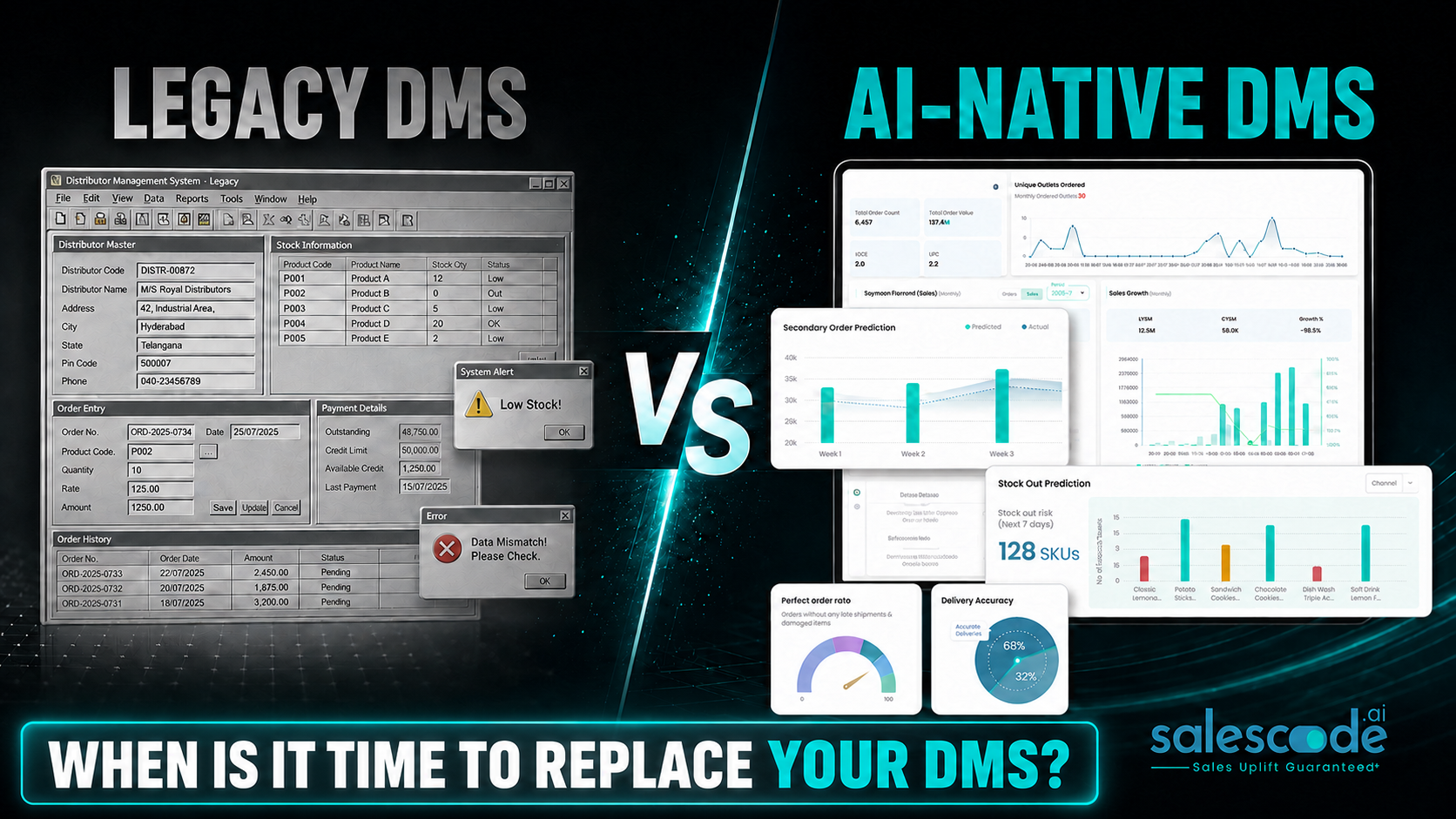
A Legacy DMS may be quietly harming your organization - find out how to carry out seamless transition from older systems
"It works, but it's light years behind." The quiet verdict on legacy DMS — and the case for replacing it with an AI-Native one.
SalesCode Team · Updated August 2026 · 7 min read
Ask FMCG and CPG leaders about their distributor management system and you hear the same thing: it works, but only just. It is stable and familiar — and years behind on technology, expensive to support, and rigid. Most so-called new systems are the old ones rebuilt, broken in different ways. The real question for anyone weighing a legacy DMS replacement is not whether the current one works, but what it is costing you to keep it.
A DMS that "works, just barely" is not free. Its real cost is the support overhead, the manual workarounds, and the growth it quietly caps.
Legacy DMS Software - Key Problems
The complaints about legacy DMS are remarkably consistent across companies. Put together, they describe a category that has stood still while the business around it moved on.
"It works well, but is light years behind" on technology — built for a previous era of distribution.
"You need an army of people" just to execute and manage it day to day.
"Support costs more than the product" — the running cost outweighs the licence.
"Most new DMSs just copy the old ones" — same design, broken in different ways.
So why do companies stay? Usually one reason: it works, and there haven't been many real alternatives. Today, legacy DMS is one of the biggest bottlenecks in FMCG and CPG trade execution — outdated, rigid, and turning modern growth into manual work.
Hidden Costs of Legacy DMS Software - What Harms Your Organization?
The line that stops most DMS replacements is "but it works." It is true, and it is also a trap — because "works" measures the wrong thing. A legacy distributor management system can process orders and still be one of the most expensive line items in your route-to-market, once you count what it actually takes to keep running.
The real total cost of ownership sits mostly below the invoice. There is the support overhead that, as many FMCG leaders admit, can exceed the licence cost itself. There is the army of operators needed to execute and manage it. There is the manual reconciliation between the DMS, the SFA and the ERP when they don't share a data model. And there is the largest cost of all — the growth you never capture because the system caps what your distribution can do.
Support > licence. When keeping it alive costs more than owning it, the economics have already inverted.
Operator dependence. Every distributor needing trained staff is a recurring cost and an adoption ceiling.
Reconciliation tax. Separate DMS, SFA and ERP mean constant manual matching and drift.
Opportunity cost. The growth a rigid system quietly prevents never shows up on any invoice.
Legacy DMS vs Modern AI-Native DMS - What Changes?
A modern, AI-Native DMS is not a prettier version of the old one. It is built for the realities of today's trade and the possibilities of AI — designed so the system does the work the "army of people" used to.
Needs trained operators. Heavy support cost. Rigid, on-premise, slow to change. Records data. Compliance-driven.
No operator, no training. Low support overhead. Composable and quick to deploy. Predicts and advises. Value-driven.
No operator or training — it runs itself, so you don't need an army to manage it.
Feels like WhatsApp — mobile-first, voice-enabled, local-language.
Auto-suggests actions — smart nudges, automatic replenishment and stock-out alerts, not just records.
Rewards usage instead of enforcing compliance, so distributors actually adopt it.
Integrates seamlessly with existing accounting systems.
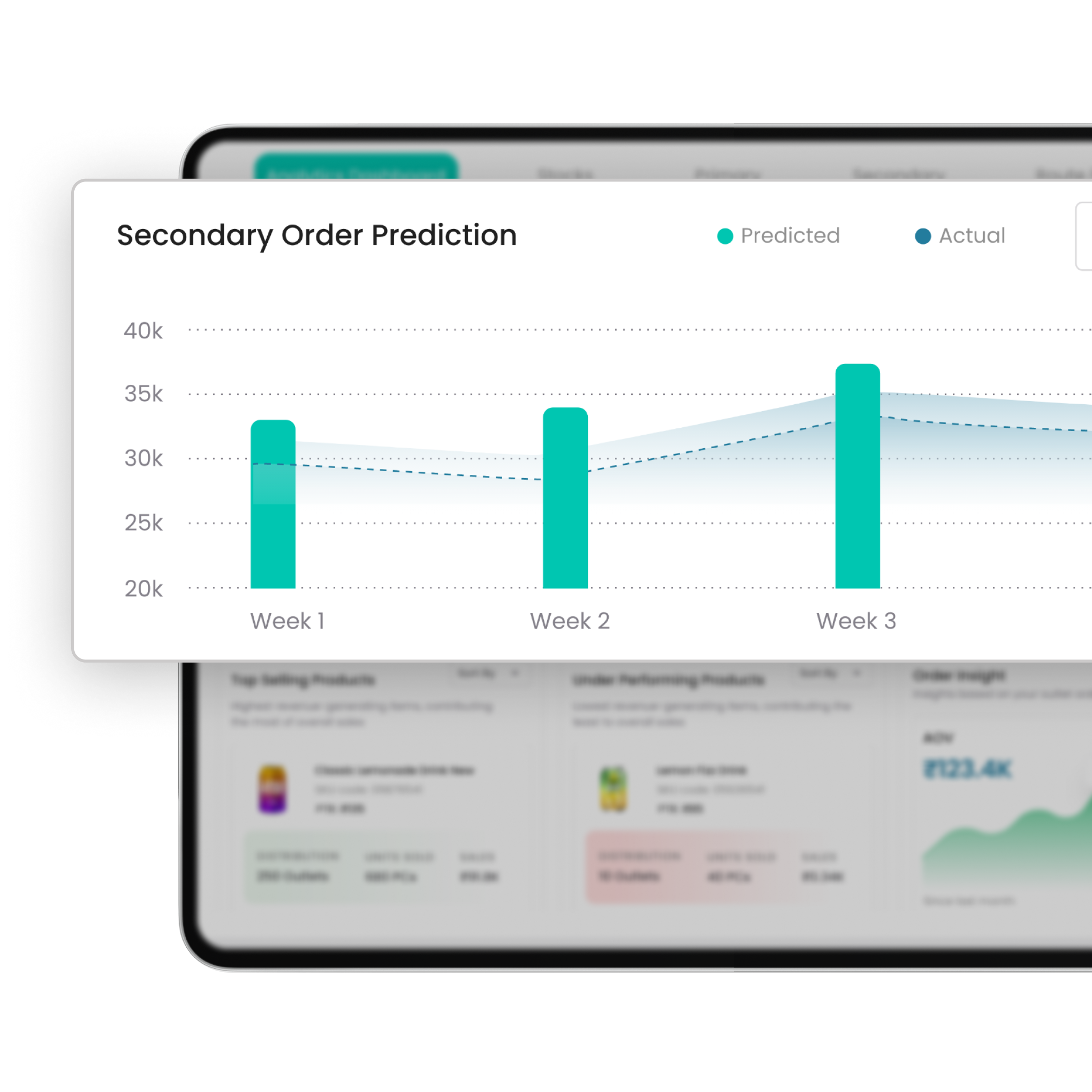
AI order prediction recommends the right order from predicted demand and stock.
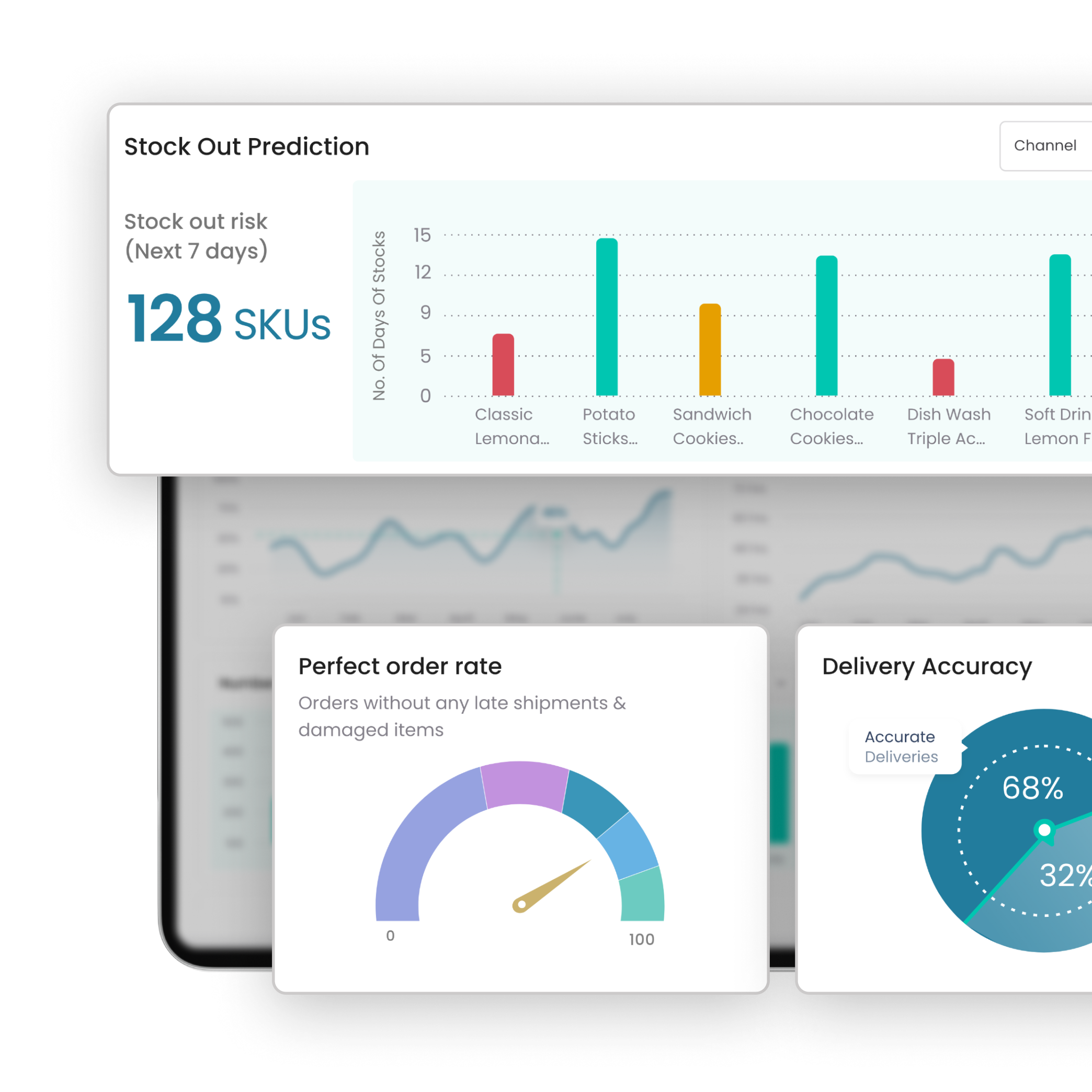
Stock-out prediction flags SKU-level risks before they cost a sale.
AI-Native DMS - Key Features
One complaint deserves its own answer: "most new DMSs are just copies of the old ones, broken in different ways." It is fair. Re-skinning a legacy system with a new interface does not change what it fundamentally is — a passive system of record that waits for people to key in data.
An AI-Native DMS is a different category, not a newer coat of paint. Two things make it structurally different. First, it is composable rather than monolithic — modules can be configured and deployed independently, so it adapts to your route-to-market instead of forcing your route-to-market to adapt to it. Second, intelligence lives in the core: the system predicts orders, recommends replenishment and flags stock-outs as native behaviour, not as a bolt-on report. The difference between recording and predicting is the difference between the two generations.
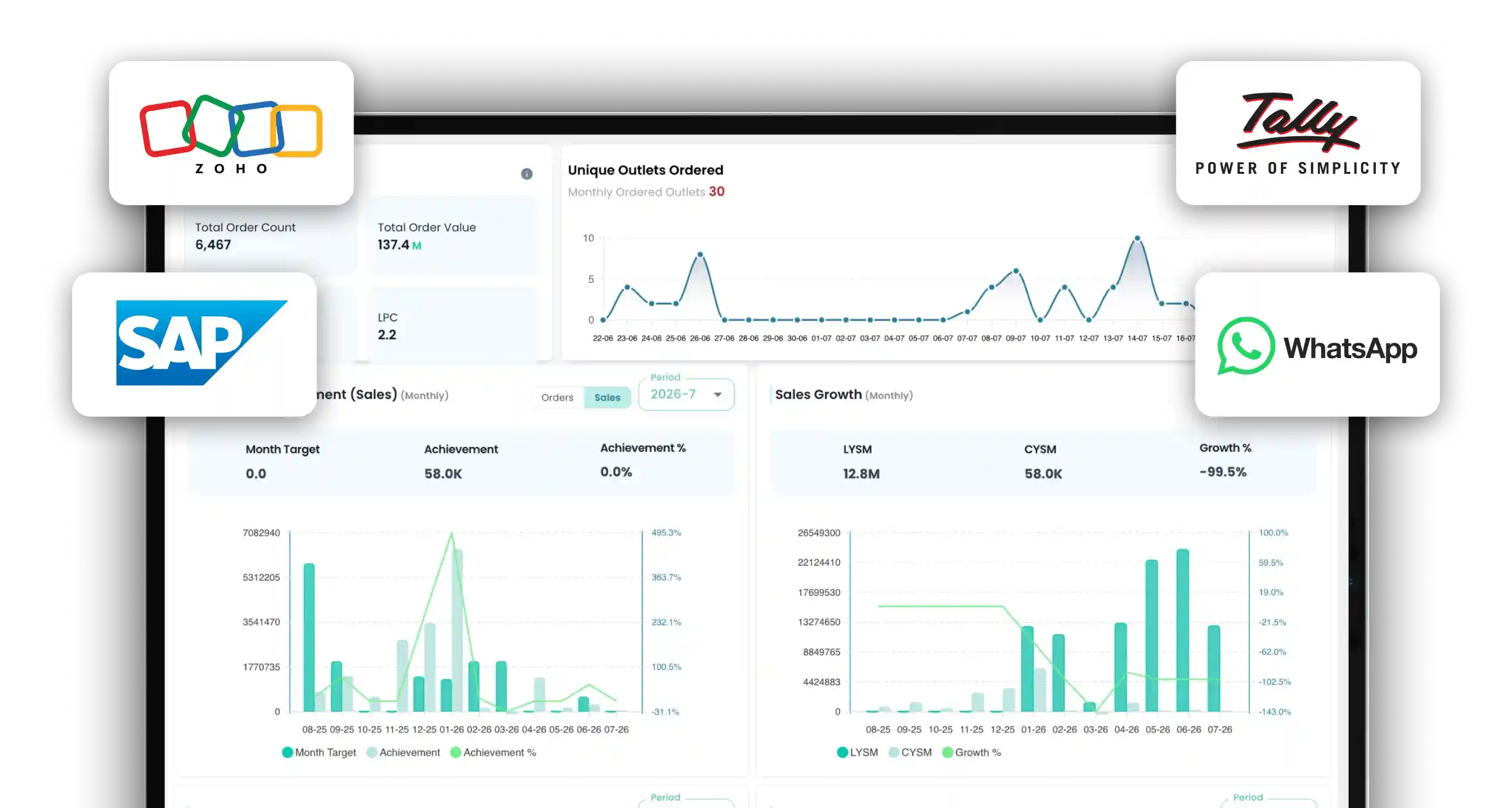
Seamless integration with Tally, SAP and existing accounting systems.
A modern interface on a legacy engine is still legacy. AI-Native means the system does the work — predicting and advising — rather than waiting to be fed.
When to Replace Legacy DMS: An Implementation Strategy
Replacing a system that "works" feels risky — but there are clear signals that the cost of keeping legacy DMS now outweighs the cost of change.
Support costs more than the product. When running the system outweighs its licence, the economics have already flipped.
You need people to make it work. If execution depends on an army of operators, the tool is failing its job.
Distributors avoid it. Low adoption means your secondary sales data — and any AI you hope to build on it — is unreliable.
It can't keep up with the trade. If modern growth feels like manual work, the system is now the bottleneck.
The biggest risk today isn't replacing a working DMS. It's staying on one built for yesterday while trade execution is being reinvented around AI.
How to Avoid Trade Disruption While Switching DMS
Deciding to replace a legacy DMS is one thing; doing it without disrupting daily trade is another. A modern AI-Native DMS is designed for low-risk migration — but the approach still matters. Here is how leading FMCG teams make the switch.
Start from the distributor experience
The old rollout failed because it needed operators and training. Pick a system that runs without either, so onboarding is measured in hours, not weeks.
Migrate on a shared data model
Replacing DMS in isolation recreates the reconciliation tax. Move to a platform where DMS, SFA and secondary sales share one data model, so the numbers tie out from day one.
Deploy composably, not big-bang
A composable architecture lets you configure and roll out module by module, business by business — de-risking the switch versus a monolithic cut-over.
Let AI carry the load
Order prediction, replenishment and stock-out alerts should be native, so the system does the work the old operator army used to — the payback that justifies the change.
Measure adoption, not just go-live
Track daily active distributors, not just deployment. Real success is distributors choosing to use it — which is exactly what legacy systems never achieved.
The switch succeeds when the new system removes the three things that made the old one painful — operators, training and reconciliation — while giving distributors a reason to log in.
AI-Native DMS and SFA: What Sets Them Apart?
Here is what that AI-Native engine looks like across DMS and SFA — one intelligence layer that predicts and advises where legacy systems only recorded.
Traditional DMS and SFA record what already happened. AI-Native DMS and SFA predict what should happen next — primary orders, secondary demand, stock-outs and loadout — on one intelligence engine shared across every user and channel. It isn't automation with AI bolted on; it's AI-native from the core.
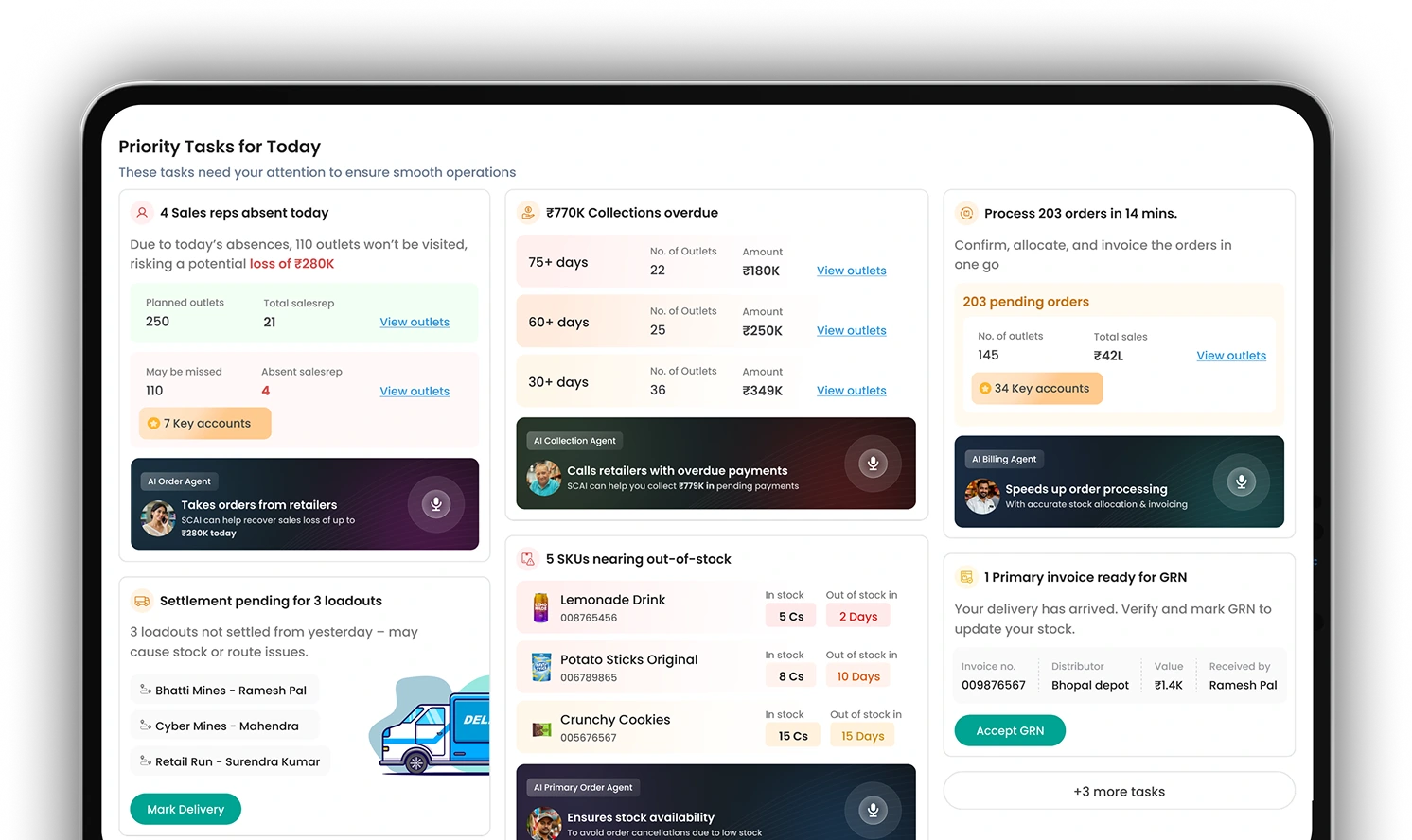
AI-Native DMS — one platform, one intelligence engine, shared across every user and channel.
Four AI modules, one data model
Recommends distributor orders from predicted secondary sales, stock levels, order cycle and fulfilment time.
Plans inventory and working capital to maximise monthly sales achievement.
Flags SKU-level stock-outs before they cost a sale — critical for perishable and fast-moving stock.
Optimises ready-stock and van-sales routes to maximise what every vehicle sells.
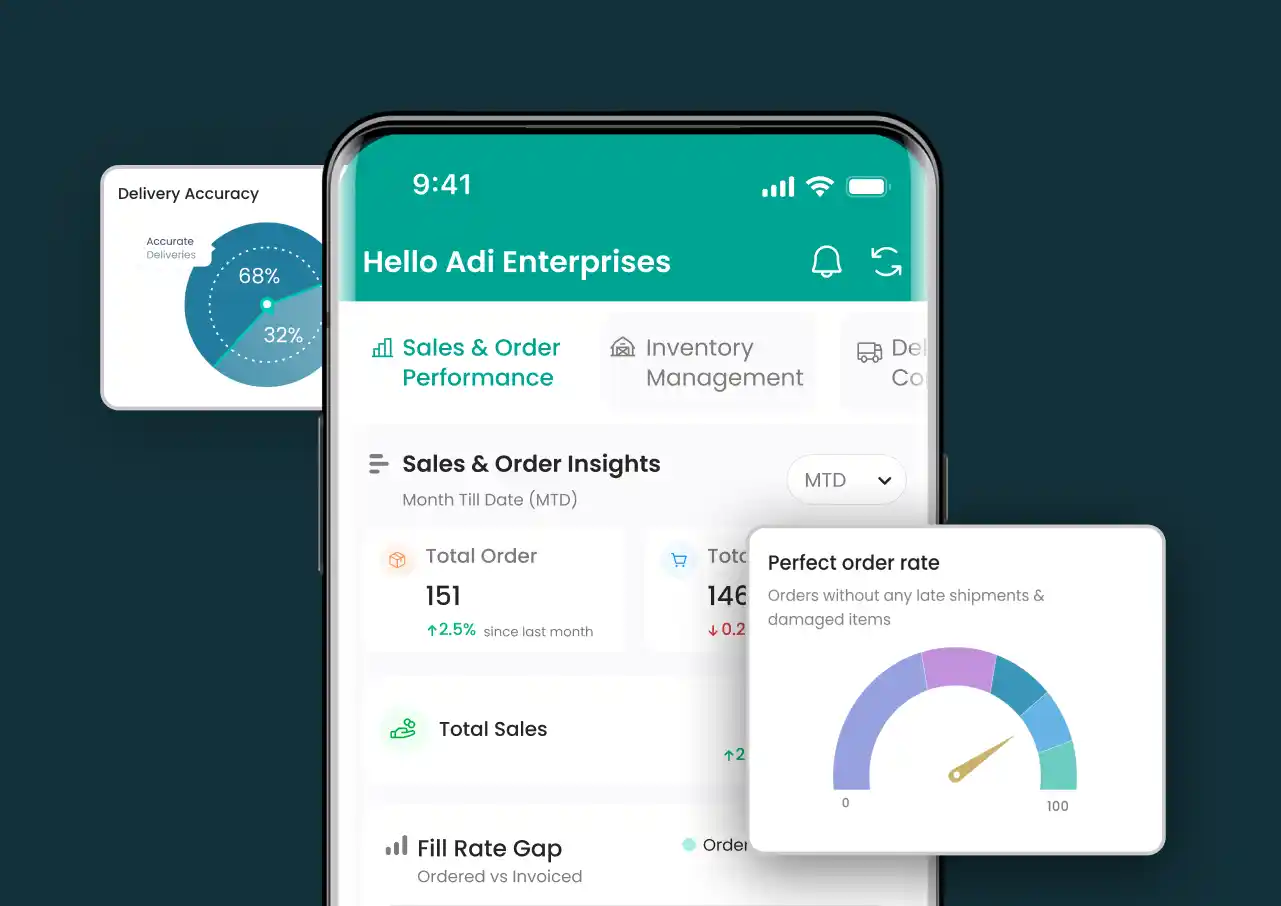
The world's first AI-native DMS predicts orders and optimises load-out instead of waiting for someone to key in data — across primary, secondary, invoicing, claims, stock and settlements. A mobile-first DMS Lite extends the same intelligence to rural and fresh distributors on low-connectivity routes.
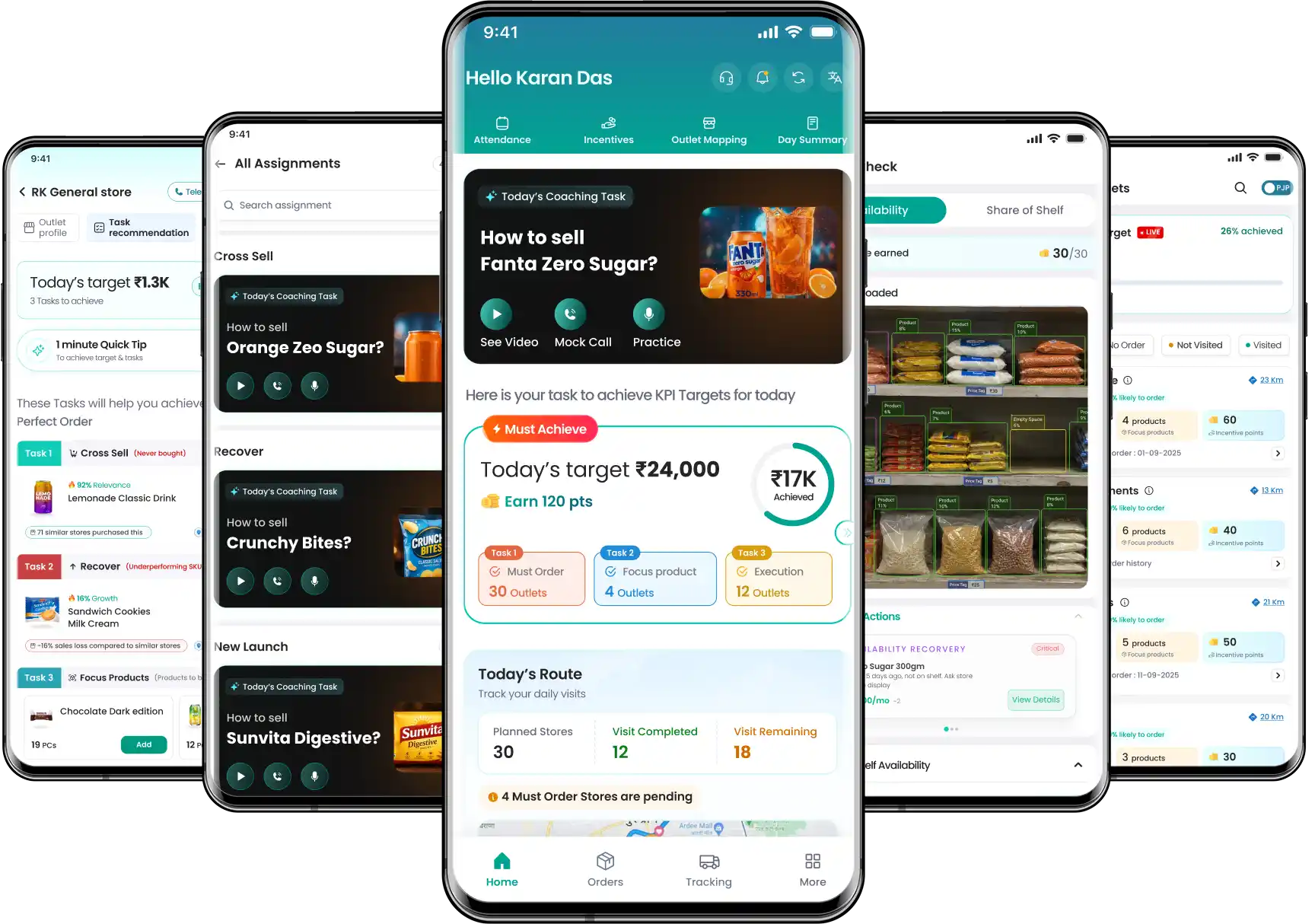
Six AI agents generate targets, tasks, coaching and outlet opportunities — guiding every field rep to the next best action, trained across 28+ KPIs and 375+ store scenarios.
Built for every role in the field
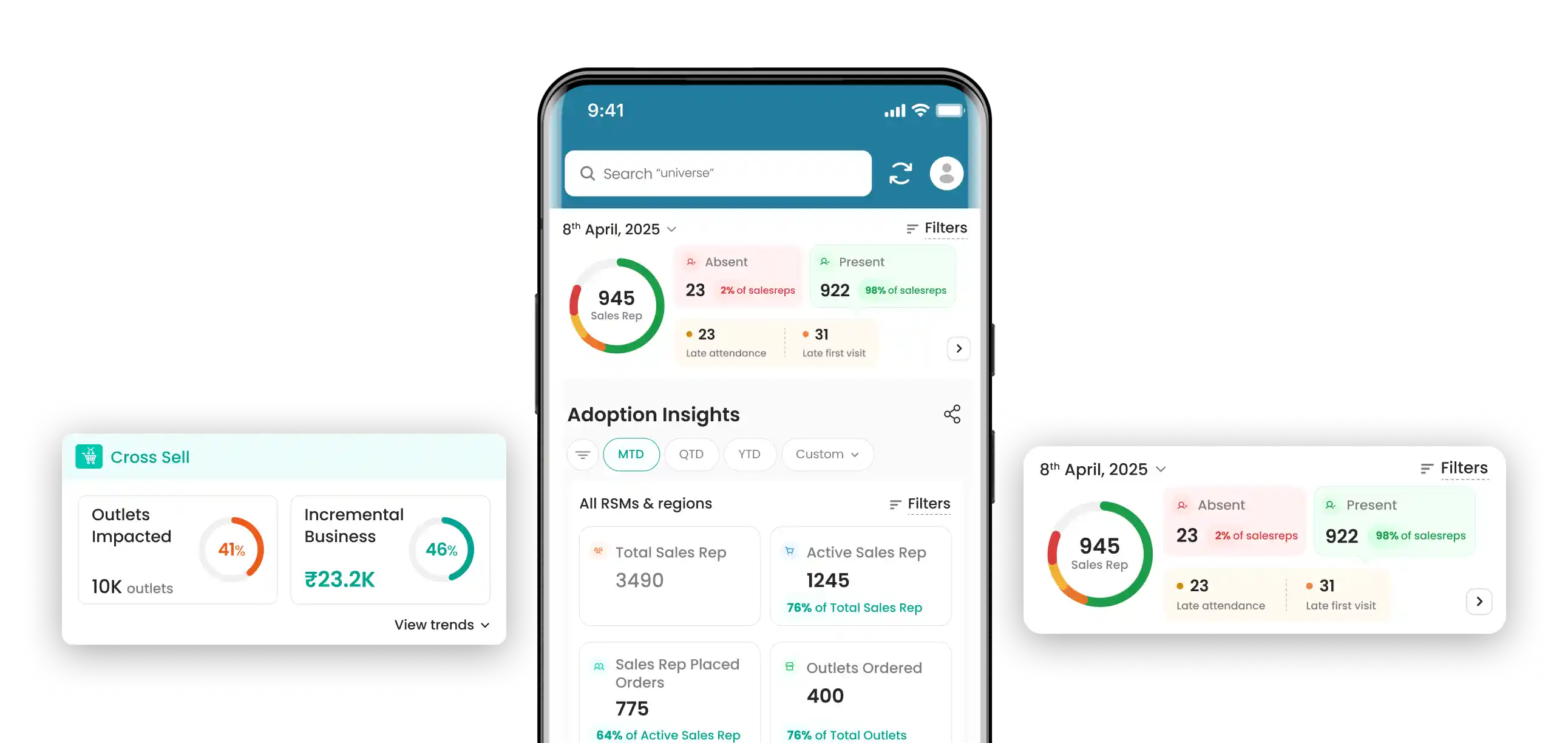
Business performance, field execution and commercial data in a single view at every hierarchy level — built to end in a decision, not another report.
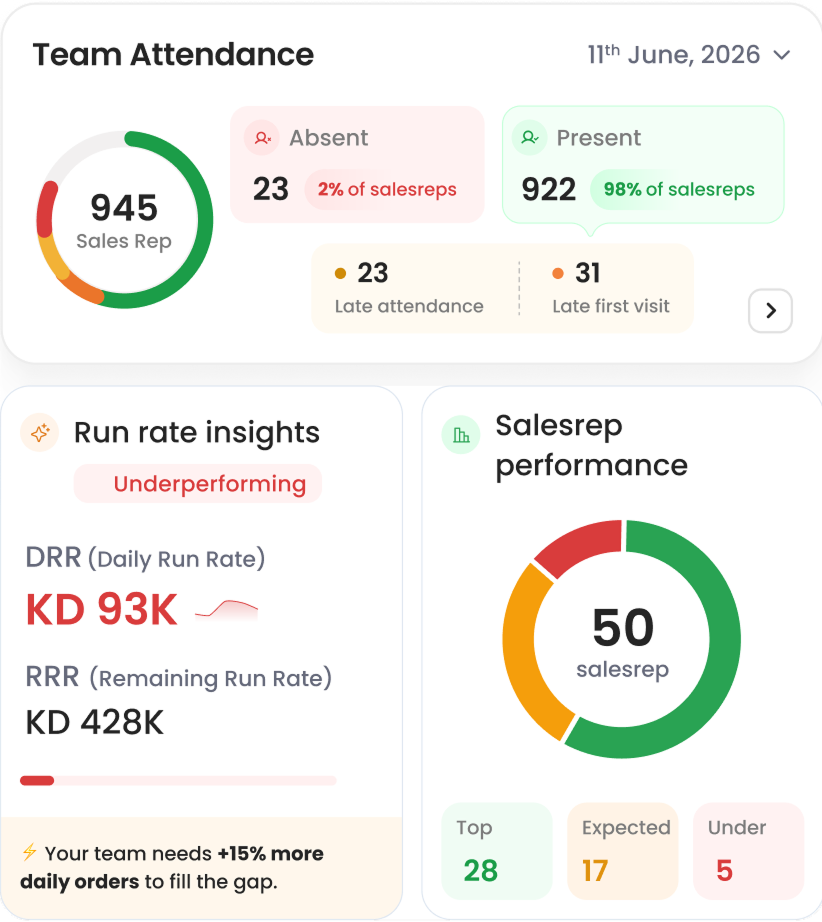
Tracks every rep, route and outlet in real time — attendance, run-rate and performance — and turns each signal into a ranked action list for first-line managers.
Frequently Asked Questions
What is wrong with legacy DMS software?
Legacy DMS is typically years behind on technology, needs large teams to operate, and often costs more to support than to license. It is rigid and hard to change, and many new systems simply replicate the old design. As a result, legacy DMS has become a bottleneck in FMCG trade execution.
When should you replace your distributor management system?
Consider replacing it when support costs exceed the product cost, when execution depends on many operators, when distributors avoid using it (making your data unreliable), or when day-to-day growth feels like manual work. These signal that the cost of keeping legacy DMS now outweighs the cost of change.
What is an AI-Native DMS?
An AI-Native DMS is a distributor management system with AI built into its core rather than added on. It runs without a dedicated operator or training, works on mobile like a consumer app, and predicts orders, replenishment and stock-outs — so the system does work that legacy tools left to people.
Is replacing a legacy DMS risky?
Staying on a legacy DMS carries its own growing cost — support overhead, manual workarounds and capped growth. A modern AI-Native DMS is designed for fast deployment and easy adoption, which reduces switching risk compared with the traditional operator-heavy rollouts of legacy systems.
What are the alternatives to legacy DMS?
The main alternative is an AI-Native DMS: mobile-first, no-operator, composable software that predicts and advises rather than only recording. It addresses the core legacy complaints — high support cost, operator dependence, rigidity and low adoption.
Tired of a DMS that works… just barely?
See what SalesCode.ai's AI-Native DMS looks like — no operator, low support cost, built for the realities of today's trade and the possibilities of AI.
Book a demo →Recent Blogs

Show Us a Better SFA, DMS or eB2B. Win 1 Million $.
Get a Big 4 firm to audit your platform against ours. Score higher on capability. We cut the cheque.


Open to any competing SFA, DMS or eB2B provider. Audit must be a Big 4 firm using a scorecard agreed with SalesCode.ai in advance.
AI Native Products
Image Recognition
Connectors

The AI-native route-to-market platform for CPG & FMCG enterprises — delivering a contractually guaranteed sales uplift, backed by IEEE peer-reviewed ML.
+91 8031152805
Mon–Fri · 10:00–19:00 IST
business@salescode.ai
Talk to our team
Social