
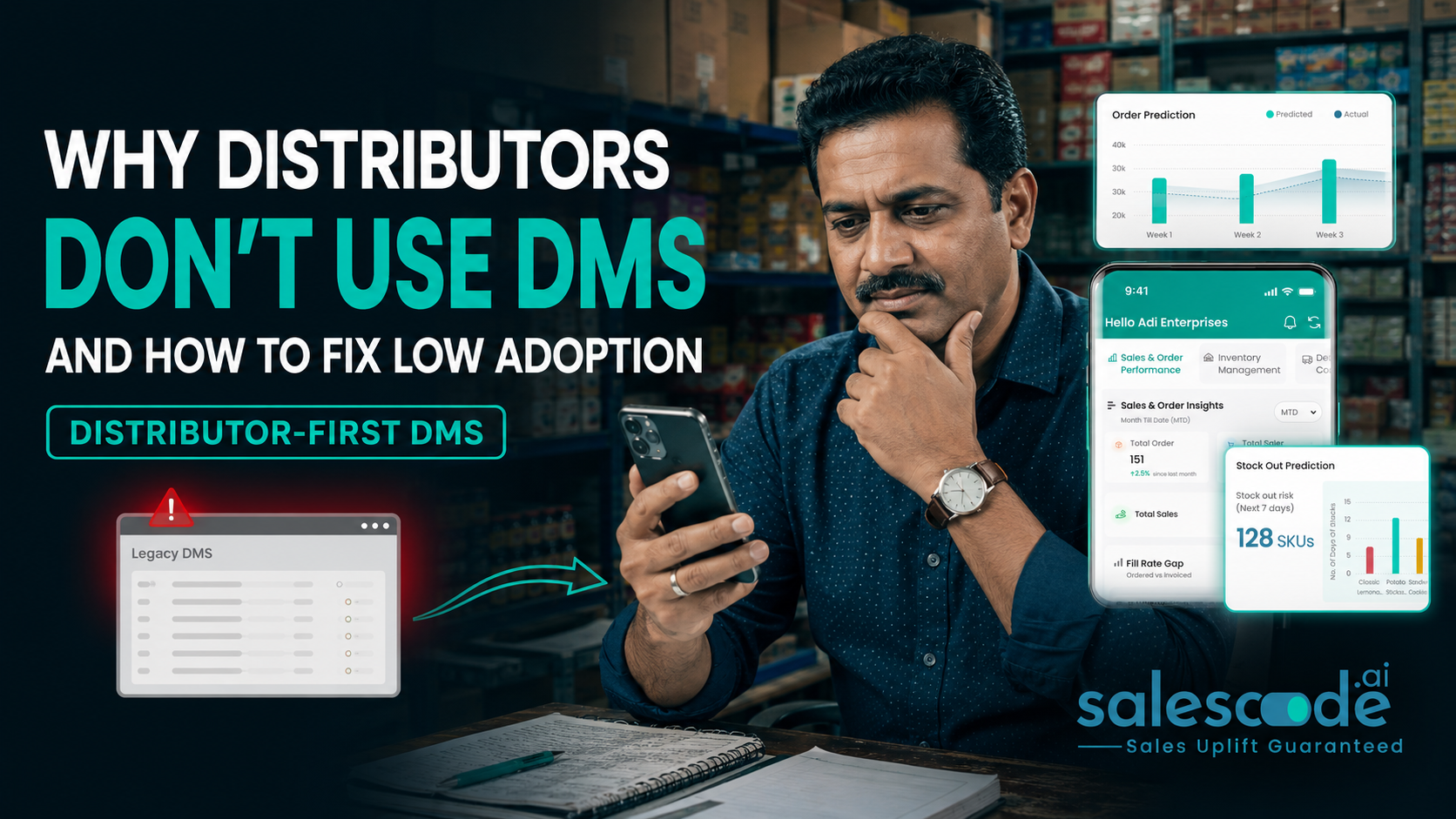
Undertanding why your distributors don't use DMS - expert insights on pain points, fixes, and implementation
Every FMCG company wants a distributor management system. Almost no distributor wants to use one. Here's why — and how AI-Native DMS closes the gap.
SalesCode Team · Updated August 2026 · 7 min read
There is a strange contradiction at the centre of FMCG distribution. Head offices invest in a distributor management system (DMS) for visibility and control — yet the distributors expected to run it often resist, work around it, or abandon it. The right question is not "how do we build a DMS?" It is: why does every company want a DMS, but no distributor wants to use it? Answer that, and DMS adoption stops being a fight.
Low DMS adoption is rarely a discipline problem. It is a design problem — the system was built for the company, not the distributor who has to use it every day.
Cost of Low DMS Adoption
The adoption gap is not a soft issue. In most FMCG and CPG networks, secondary sales — what the distributor actually sells onward to retailers — is the single most valuable data set the company owns, and the hardest to see. When distributors avoid the distributor management system, that data arrives late, partial, or reconstructed from primary invoices that only show what was shipped, not what sold.
The knock-on effects compound quietly. Forecasts drift because they are built on shipment data, not true demand. Trade schemes get gamed because there is no clean line of sight into what happened at the distributor level. And any AI or analytics ambition stalls before it starts, because models are only as good as the secondary sales data feeding them — and that data is exactly what low adoption starves.
Distributor adoption is not a compliance metric. It is the input layer for forecasting, trade-spend control and every AI initiative that sits on top of your distribution data.
Benefits of DMS Adoption for CPG and FMCG Organizations
From the company's side, the case for a DMS is overwhelming. It turns a blind, invoice-to-invoice relationship into a live view of what is actually happening in the channel.
Real-time stock & sales visibility across every distributor, not a month-end guess.
Control over schemes, pricing and credit so trade spend is not leaking.
Better forecasting and automated replenishment to cut both stock-outs and overstock.
Audit trail, accountability and compliance across the distribution network.
Structured secondary sales data — the fuel that powers any AI or ML on top.
Why Don't Distributors Use DMS Software?
Every one of those benefits accrues to the company. Ask the distributor what a traditional DMS does for them, and the honest answer is often: it makes their day harder. That is why DMS adoption stalls.
It needs a trained operator — unviable for a small distributor running lean.
Complex, slow interfaces that feel like work, not help.
Poor mobile usability during real-time field work.
Too many steps for simple tasks like invoicing or returns.
No personalised insight or nudges — it records, it does not advise.
No incentive to log in — compliance is punished, usage is not rewarded.
A distributor asked to do more data entry for someone else's dashboard will always find a workaround. Adoption follows value, not mandates.
Key Failing Behind DMS Adoption - The Incentive Mismatch
The deeper reason legacy systems fail at adoption is an incentive mismatch. Enterprise software is usually bought by the people who benefit from its reporting — head office — and used by people who get nothing back — distributors and their staff. Every extra field, every mandatory step, every clunky screen is a tax the user pays so someone else can see a dashboard.
Consumer apps solved this problem years ago. WhatsApp, UPI payment apps and food-delivery platforms are used daily by the same shopkeepers and distributors who resist enterprise DMS — not because they were trained, but because each interaction gives immediate, obvious value. The lesson for distribution software is direct: adoption follows value received, not authority asserted.
Design for the user, not the buyer. The distributor's daily experience decides adoption, not the head-office feature list.
Every screen must give something back — a reorder suggestion, a stock alert, a faster invoice — or it will be skipped.
Familiarity beats training. If it works like the apps people already use, the training budget disappears.
What does an easy-to-use DMS look like? The AI-Native Solution
The fix is to flip the design brief. Instead of a control tool for the company, build a growth partner for the distributor — one that earns daily use because it gives something back. That is the idea behind an AI-Native DMS: intelligence built into the core, not bolted on.
No operator, no training — it works out of the box for even the smallest distributor.
Feels like WhatsApp — familiar, fast, mobile-first, voice-enabled and in the local language.
Auto-suggests actions — smart nudges, automatic replenishment, stock-out alerts — instead of only recording them.
Rewards usage rather than punishing non-compliance, so logging in has a payoff.
Feeds intelligence back to the company without friction — clean secondary sales data as a by-product of a tool people actually like.
Integrates with existing accounting systems so it fits the distributor's world.
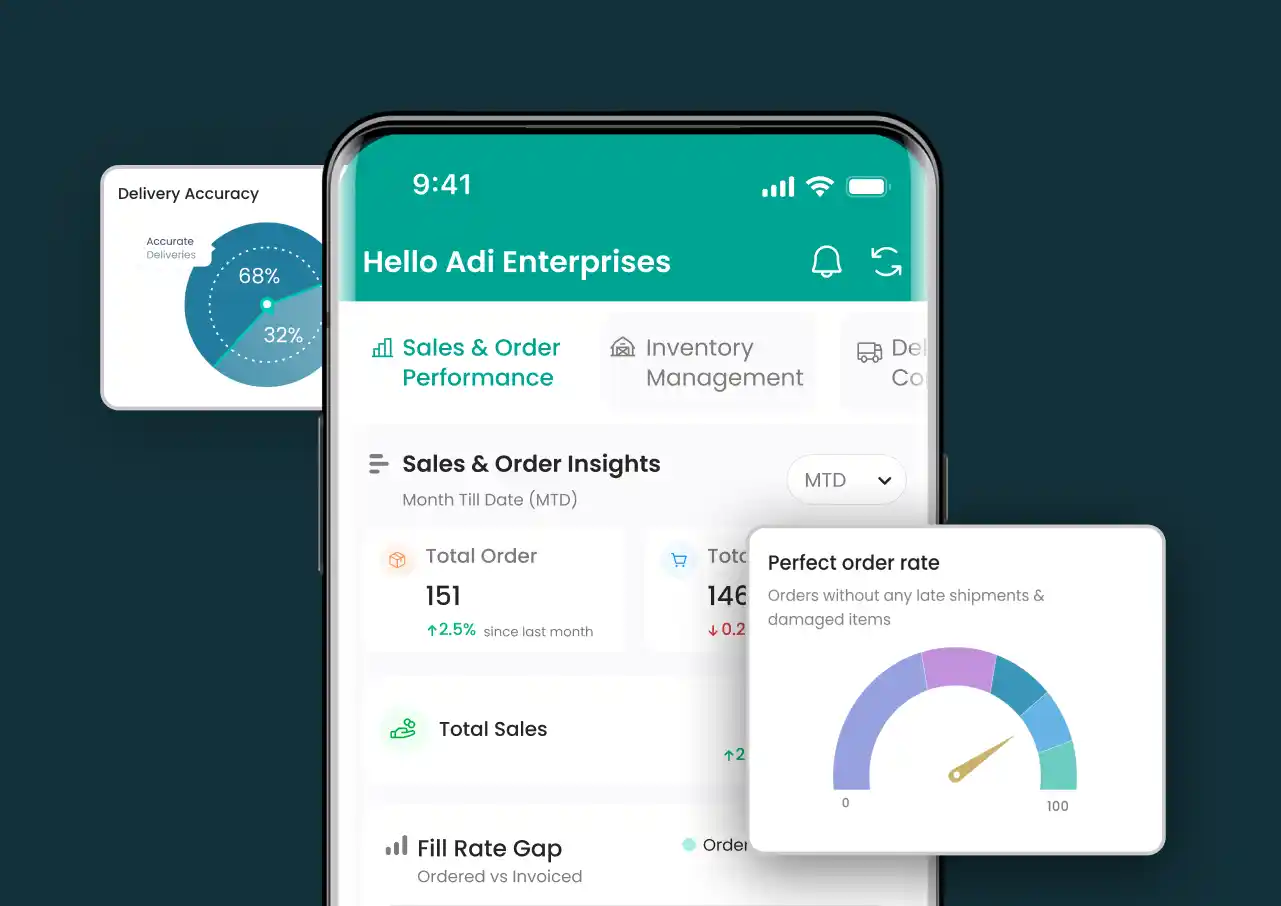
A mobile-first, WhatsApp-easy DMS built for the distributor — no operator, no training.
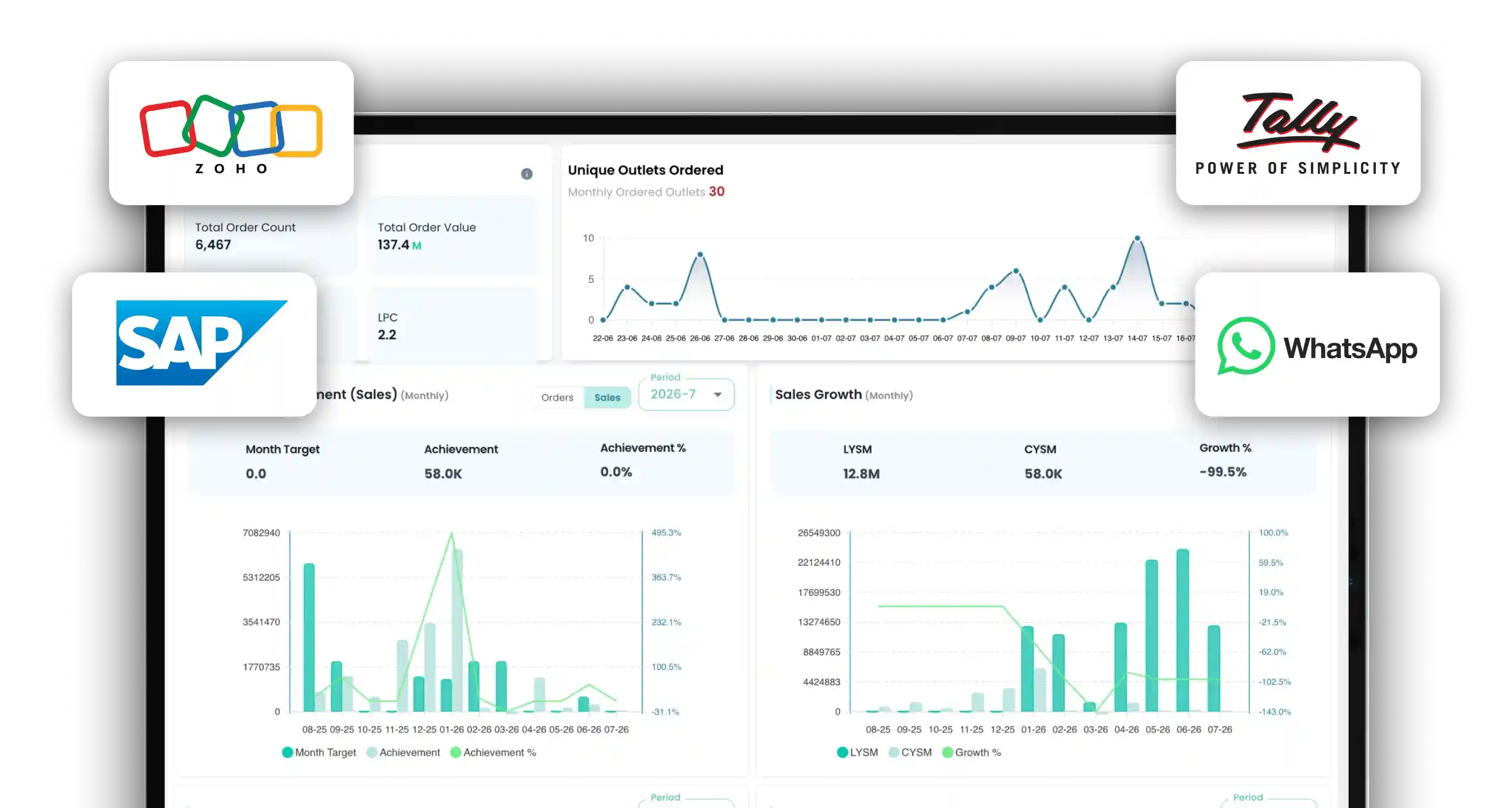
Seamless integration with Tally, SAP and existing accounting systems.
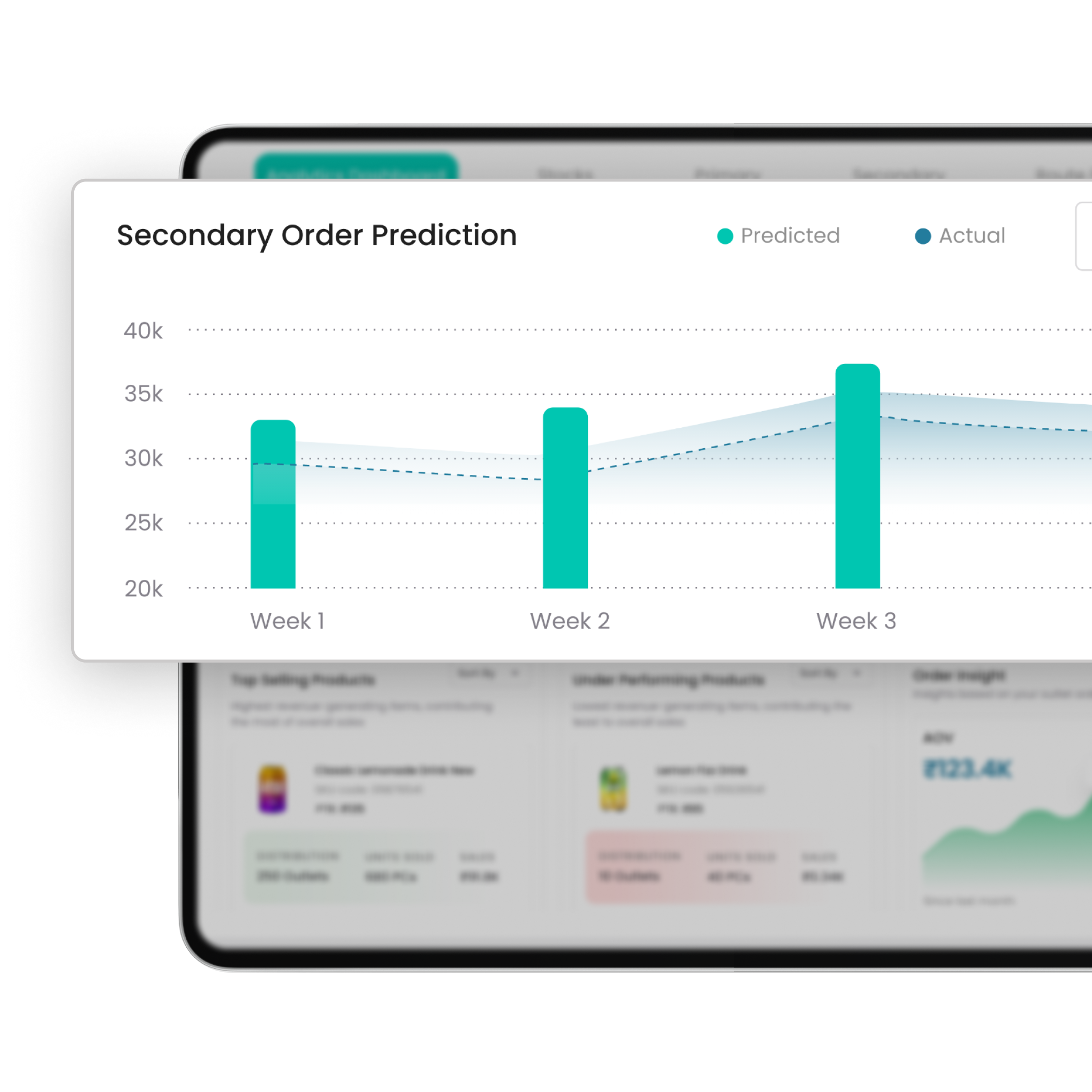
AI order prediction recommends the right order from predicted demand and stock.
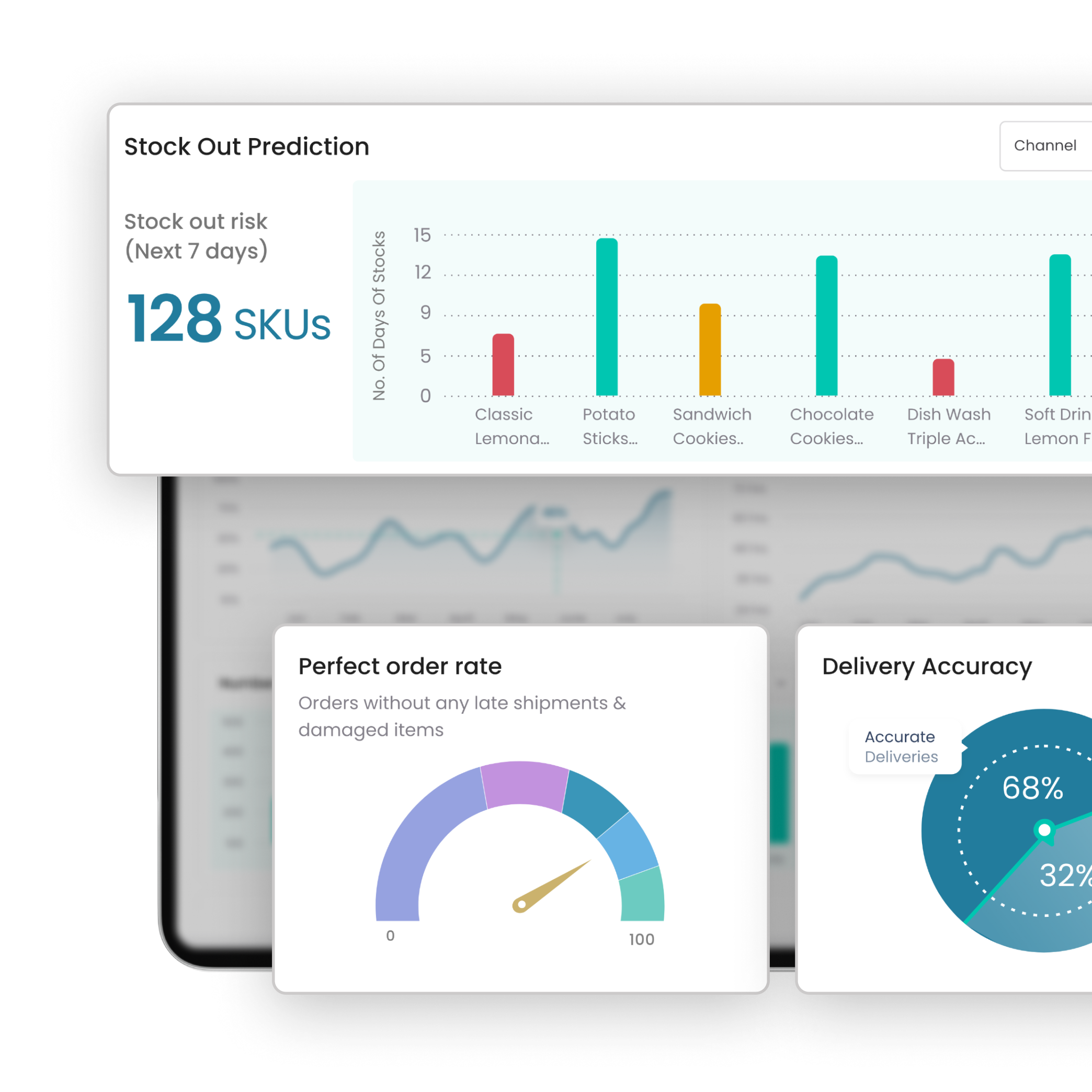
Stock-out prediction flags SKU-level risks before they cost a sale.
This is what SalesCode calls a Distributor First DMS — an AI DaaS, or Distributor's Augmented Automation System — built for the trade, not just for the company.
The 6-Step Playbook to Fix Low DMS Adoption
Fixing DMS adoption is not about tighter mandates or more training — it is about redesigning the deal so the distributor gets value every time they open the app. Here is the practical playbook that turns a system distributors avoid into one they rely on.
Remove the operator dependency
Choose a DMS that runs without a trained operator or formal training. If a small distributor can't use it directly on a phone from day one, adoption is capped before you start.
Make it feel like an app they already use
Mobile-first, voice-enabled, local-language. When the interface works like WhatsApp or a payments app, the training budget disappears and resistance drops.
Give value back on every screen
Each interaction should return something — a reorder suggestion, a stock-out alert, a faster invoice. Value received, not authority asserted, is what drives daily logins.
Reward usage instead of punishing non-compliance
Flip the incentive. Recognise and reward distributors who engage, rather than chasing those who don't. Adoption becomes a benefit, not a burden.
Cut the steps for everyday tasks
Invoicing, returns and order capture should take seconds. Every extra tap is a tax the distributor pays for the company's dashboard — remove it.
Let clean data be the by-product
When distributors use the system because it helps them, accurate secondary sales data flows back automatically — no separate compliance drive required.
AI order prediction recommends the right order from predicted demand and stock.
Stock-out prediction flags SKU-level risks before they cost a sale.
The fix for low DMS adoption is to stop selling control and start delivering value. Get the distributor experience right and the company's data, visibility and AI ambitions follow for free.
What makes AI-Native DMS & SFA different
This is what an AI-Native DMS looks like in practice — intelligence built into the core, so the system earns its daily use by doing work for the distributor, not just recording theirs.
Traditional DMS and SFA record what already happened. AI-Native DMS and SFA predict what should happen next — primary orders, secondary demand, stock-outs and loadout — on one intelligence engine shared across every user and channel. It isn't automation with AI bolted on; it's AI-native from the core.
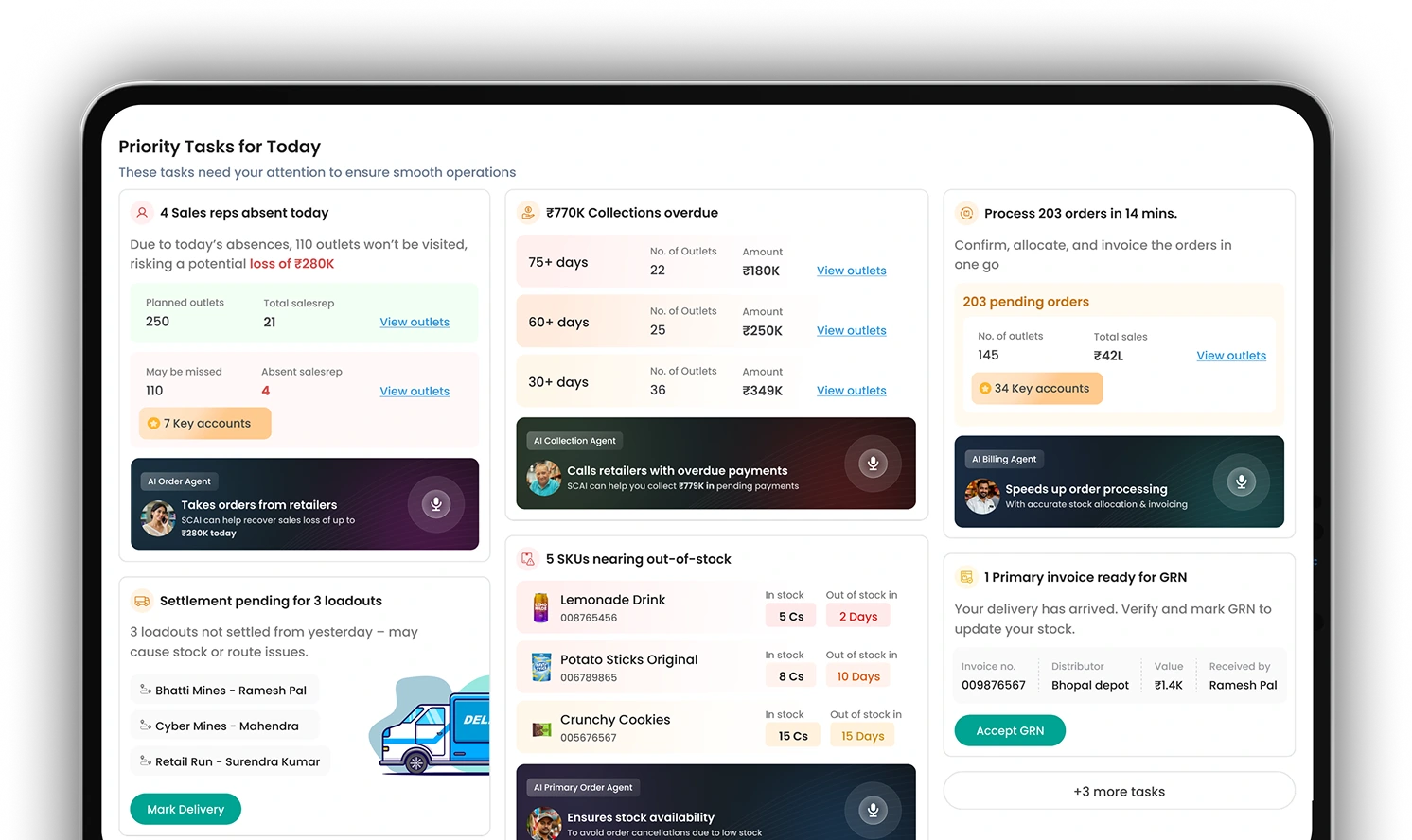
AI-Native DMS — one platform, one intelligence engine, shared across every user and channel.
Four AI modules, one data model
Recommends distributor orders from predicted secondary sales, stock levels, order cycle and fulfilment time.
Plans inventory and working capital to maximise monthly sales achievement.
Flags SKU-level stock-outs before they cost a sale — critical for perishable and fast-moving stock.
Optimises ready-stock and van-sales routes to maximise what every vehicle sells.
The world's first AI-native DMS predicts orders and optimises load-out instead of waiting for someone to key in data — across primary, secondary, invoicing, claims, stock and settlements. A mobile-first DMS Lite extends the same intelligence to rural and fresh distributors on low-connectivity routes.
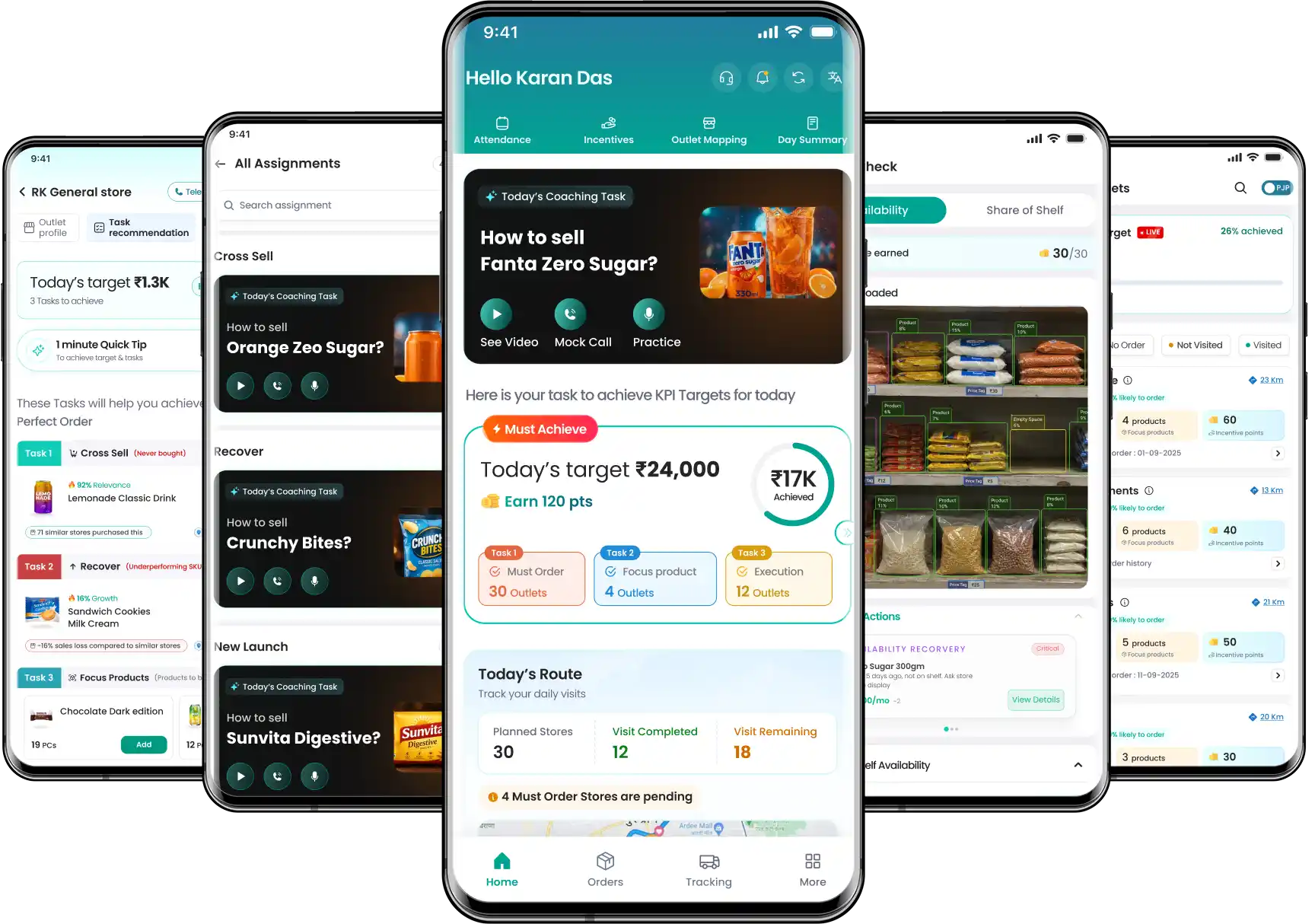
Six AI agents generate targets, tasks, coaching and outlet opportunities — guiding every field rep to the next best action, trained across 28+ KPIs and 375+ store scenarios.
Built for every role in the field
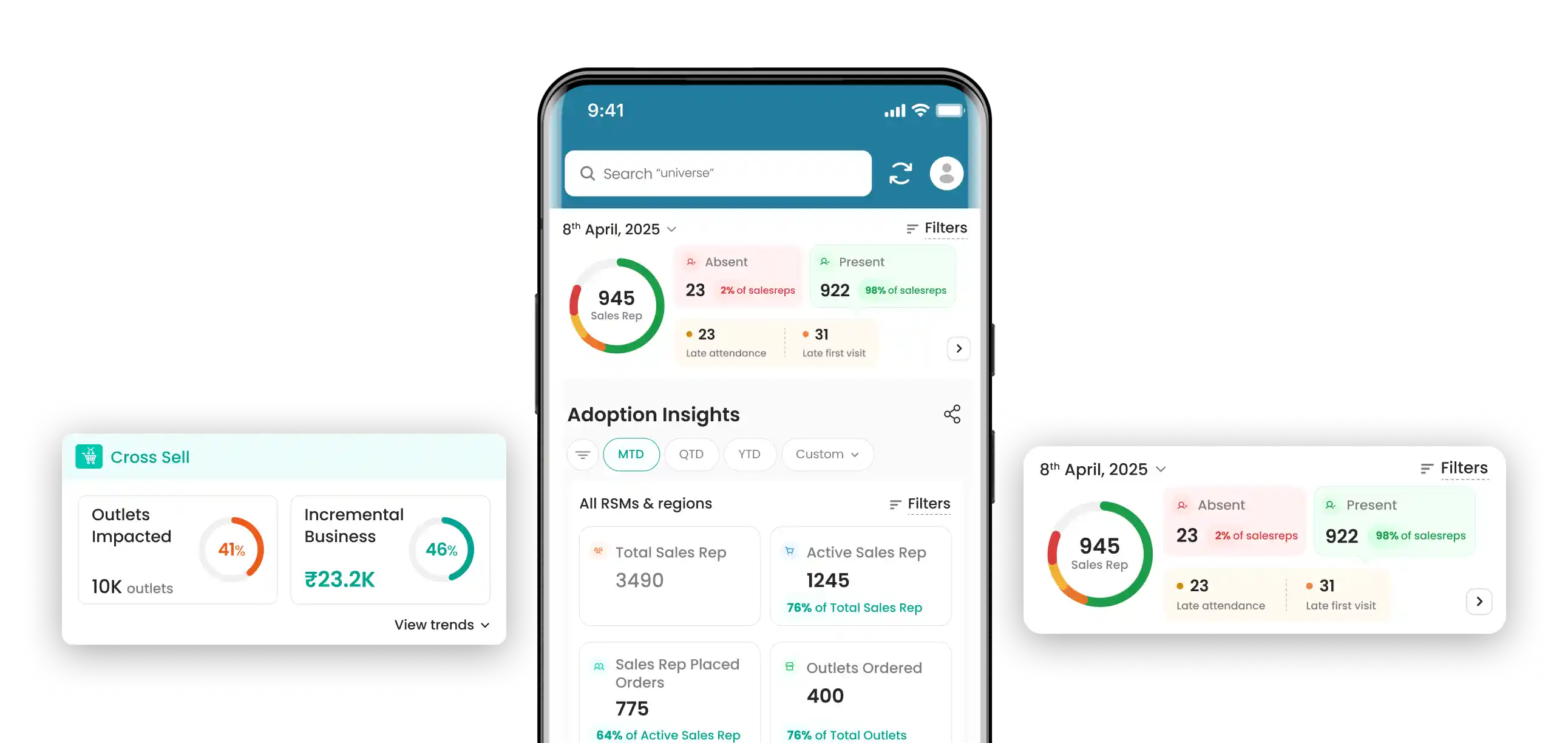
Business performance, field execution and commercial data in a single view at every hierarchy level — built to end in a decision, not another report.
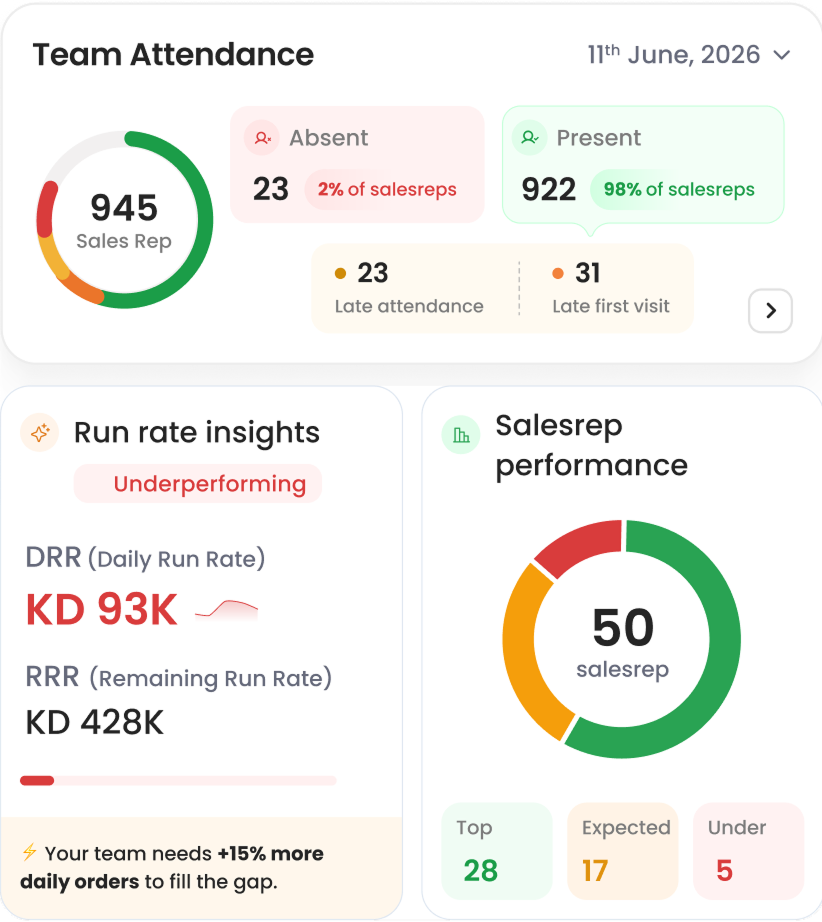
Tracks every rep, route and outlet in real time — attendance, run-rate and performance — and turns each signal into a ranked action list for first-line managers.
Frequently Asked Questions
Why don't distributors use DMS software?
Traditional DMS software is designed for the company's need for control, not the distributor's daily workflow. It often needs a trained operator, has a slow and complex interface, works poorly on mobile, and offers the distributor no insight or reward in return — so distributors work around it. Adoption improves when the DMS is easy to use, mobile-first, and gives value back.
What is a distributor management system (DMS)?
A distributor management system is software FMCG and CPG companies use to manage distribution — stock, secondary sales, schemes, pricing, credit, claims and replenishment across their distributor network. It gives the company real-time visibility and structured secondary sales data, and gives distributors a way to run orders, inventory and billing.
How do you improve DMS adoption among distributors?
Make the system worth using. A DMS that needs no operator or training, feels as easy as WhatsApp, works on mobile in the local language, auto-suggests reorders and flags stock-outs, and rewards usage will be adopted because it helps the distributor sell more — not because compliance is enforced.
Is there a DMS for small distributors without an operator?
Yes. An AI-Native DMS is designed to run without a dedicated operator or formal training, so even small distributors can use it directly on a phone. AI handles the complexity — order suggestions, replenishment and alerts — instead of relying on manual data entry.
What makes a DMS 'distributor-first'?
A distributor-first DMS is designed around the distributor's experience rather than only the company's reporting needs: mobile-first, voice- and local-language friendly, low-effort for everyday tasks, and genuinely useful through AI nudges and alerts — while still feeding clean data back to the company.
See a DMS distributors actually want to use
SalesCode.ai's AI-Native DMS needs no operator, no training, and feels as easy as WhatsApp — while giving your business the visibility and secondary sales data you need.
Book a demo →


