Motivating Reps with
Task-based incentives
Track incentive progress in real time with daily and monthly views, calculated on delivered sales and completed tasks. Live leaderboards motivate teams to achieve more, while clearly defined terms ensure complete transparency.
Most incentive plans fail because nobody can calculate them
An incentive only changes behaviour if the person being incentivised can work out, in the moment, what an action is worth. Most cannot. The plan arrives as a document, the payout arrives a month later, and nothing in between connects the two.
How points are earned, tracked and redeemed
Sales Incentive is the points layer running across Salescode SFA and Salescode eB2B. It attaches a point value to a discrete action, shows that value before the action, and settles it after.
Attach points to a task, not to a quarter
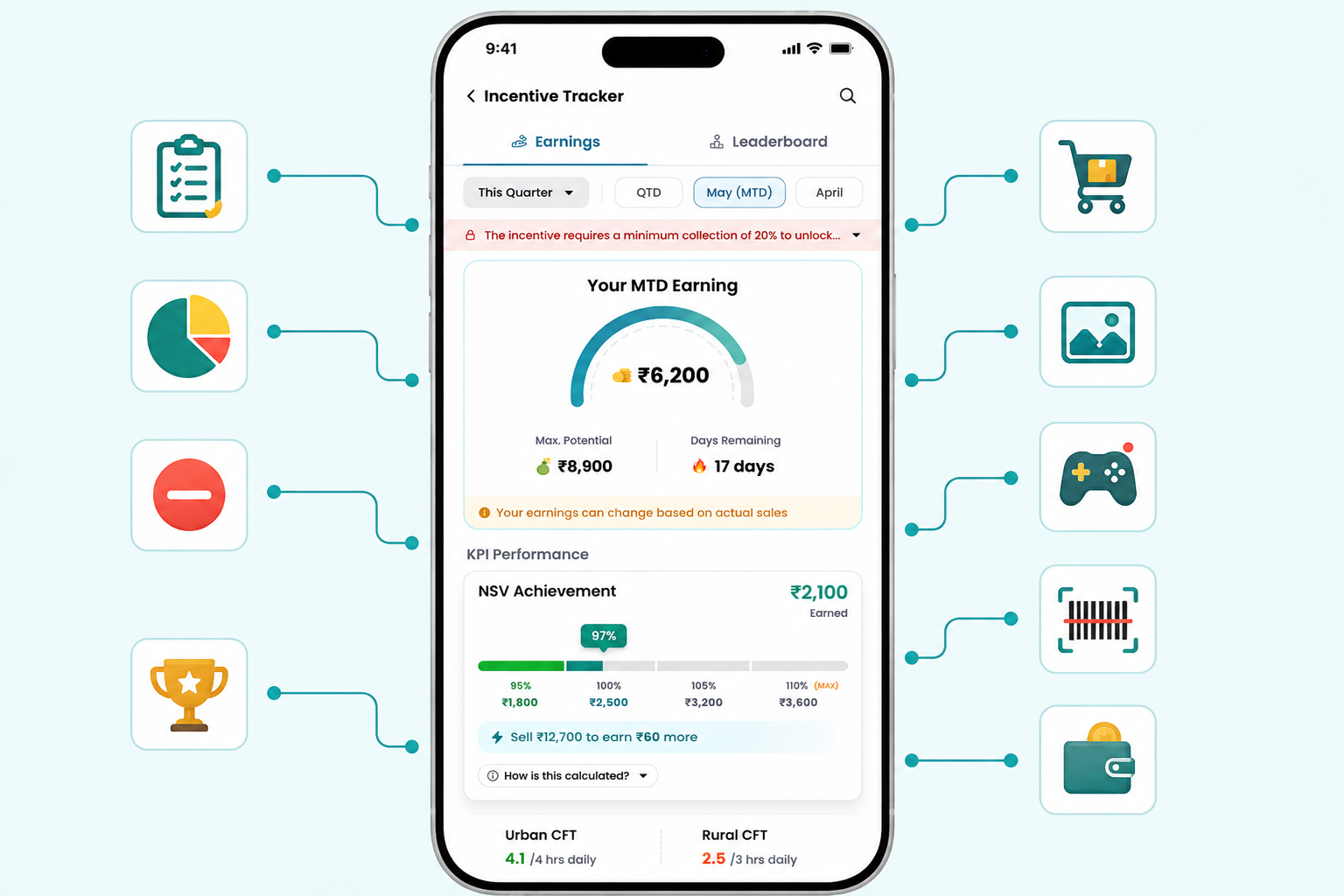
Every task in a rep's day plan carries a visible incentive opportunity in points. Every loyalty task issued to a retailer carries reward points, an expiry date and sub-tasks with clear instructions.
Nudge against the gap in real time
Mid-visit pop-ups quantify what remains: a defined number of cases from the outlet's target, a defined number of points about to be lost. Points at risk are named before they are lost, not after.
Update the balance on every order
Points earned and points left are written to the wallet at order submission. The task summary shows what was completed and what was missed, with the reason.
Settle and redeem
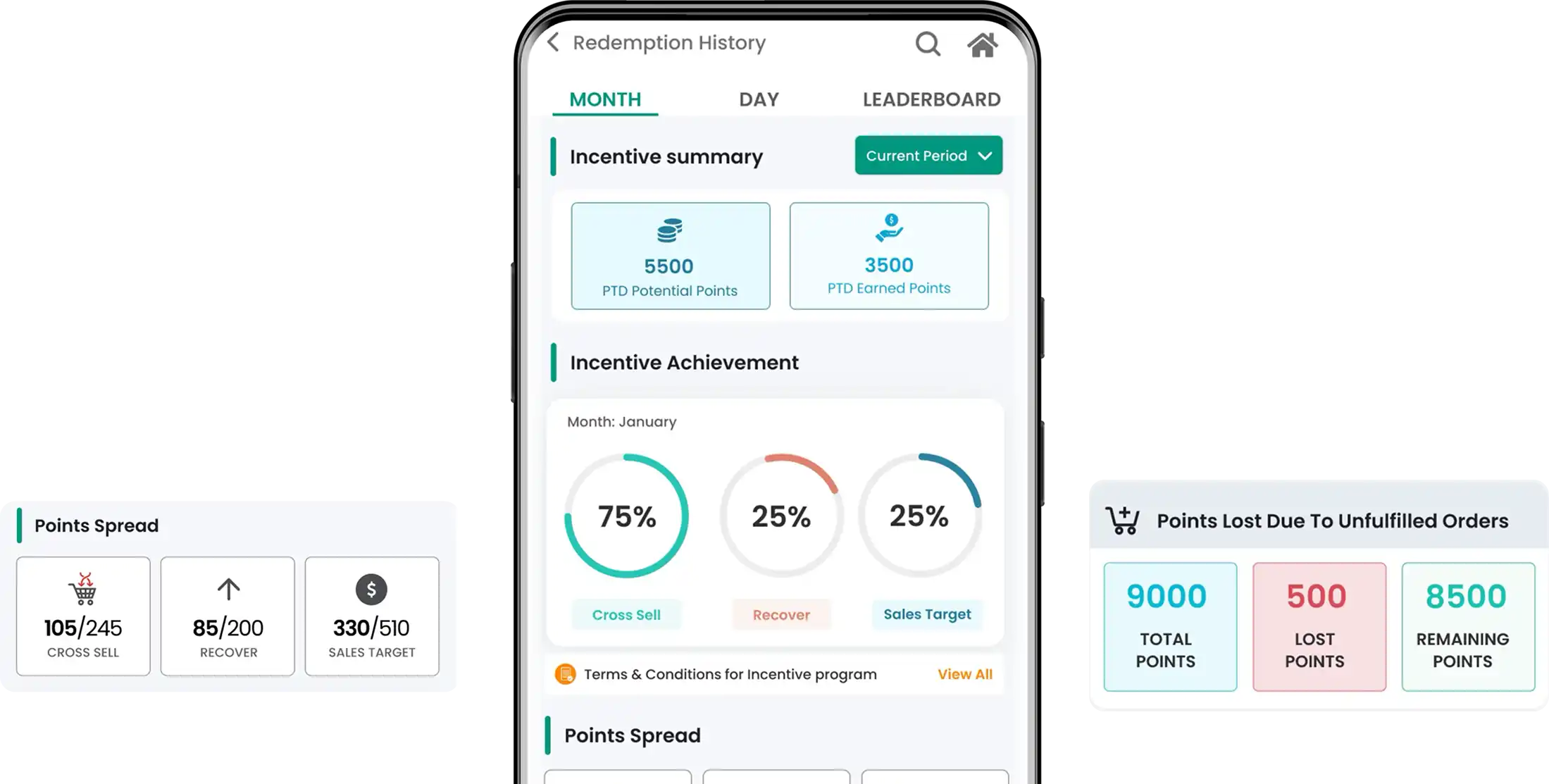
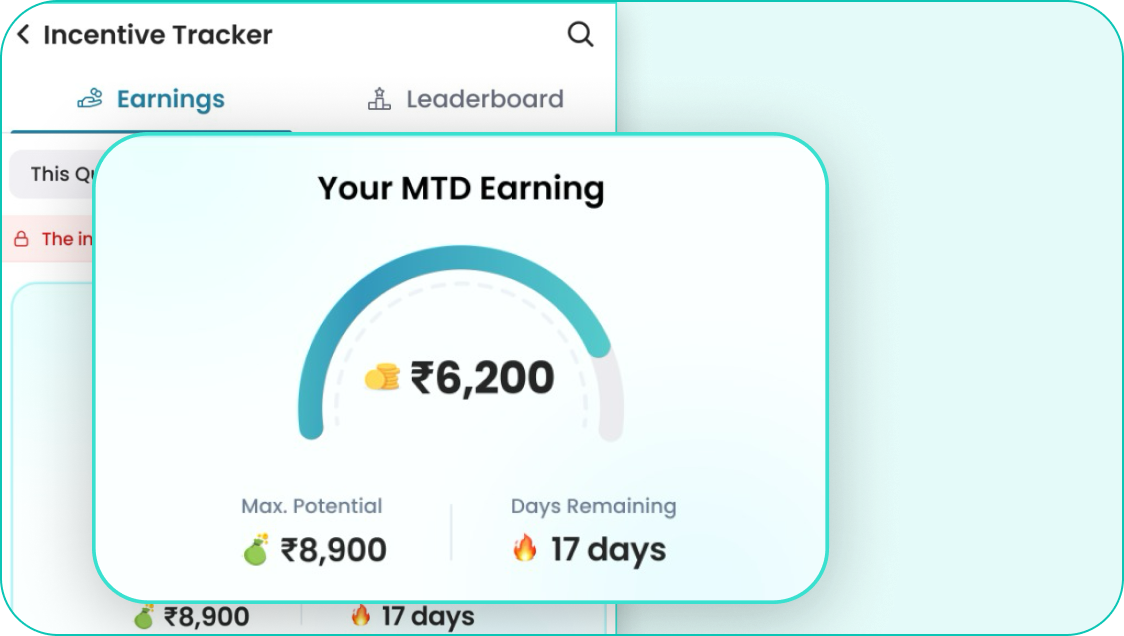
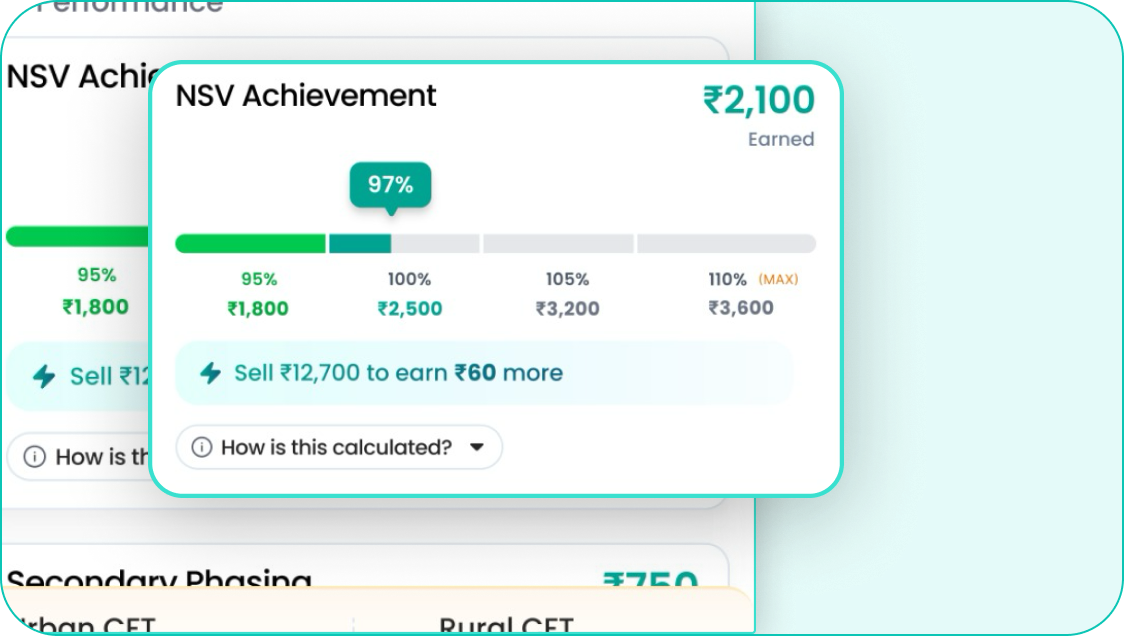
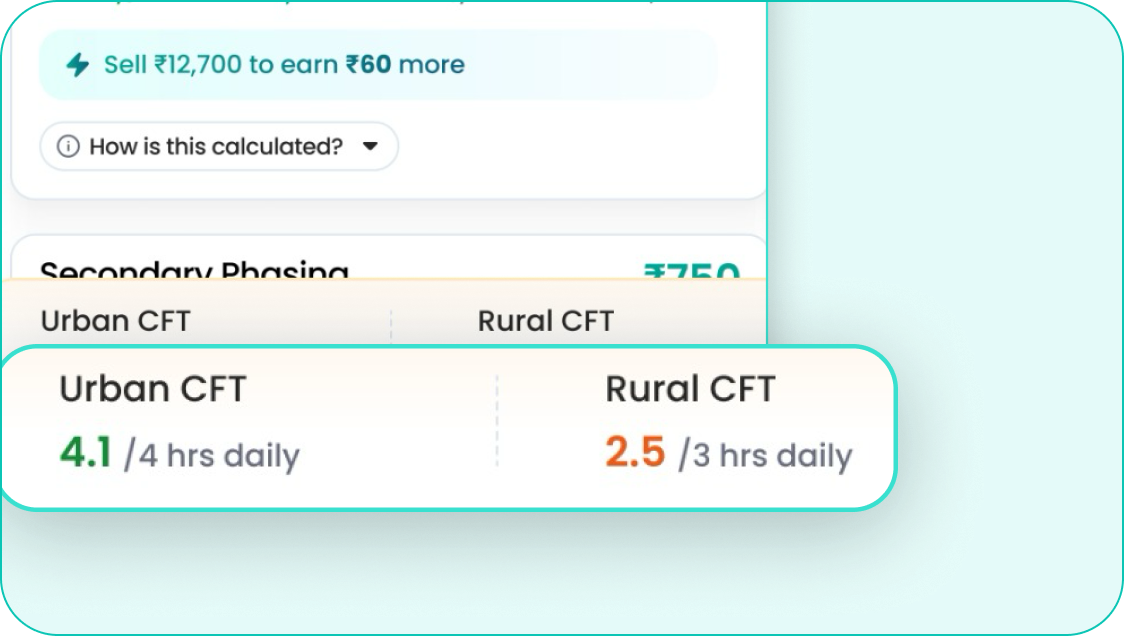
Reps redeem monthly against a summary showing potential points against earned points, achievement by category, and points lost to unfulfilled orders. Retailers redeem in the cart, where points auto-convert to a discount or e-coupon.
Task-Based Incentives That Drive Sales Performance
Reward the actions that matter most. AI automatically assigns points for high-impact sales tasks such as cross-selling, recovering missed sales, achieving targets, opening new outlets, and perfect execution. Reps get complete visibility into their incentive progress with real-time points, achievement tracking, and leaderboards that keep performance transparent and motivating.
What the loyalty engine moves
The figures below are stated by the Salescode Loyalty module documentation. The measurement basis behind each range is still open and is marked as such.
Crowdsourced execution
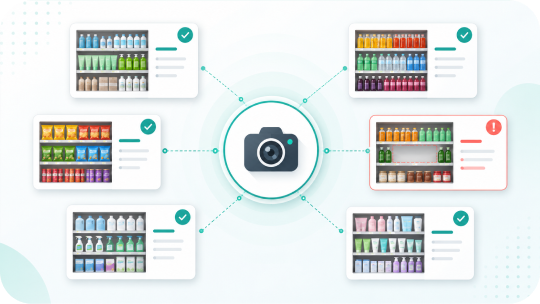
Retailers capture and submit shelf images against image-recognition tasks and earn points for each completion.
Promo redemption
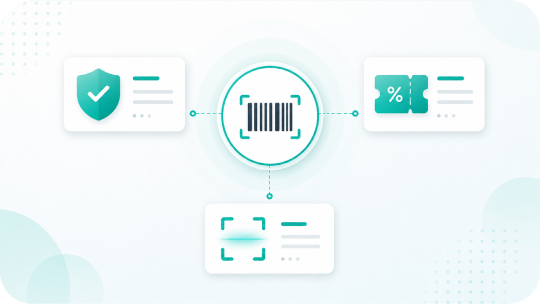
Consumer promos activate by OTP, redeem by barcode scan, and confirm the discount in the retailer's hand.
Loyalty-driven checkout
Points auto-convert to a discount or e-coupon in the cart, with wallet balance and savings visible at the moment of ordering.
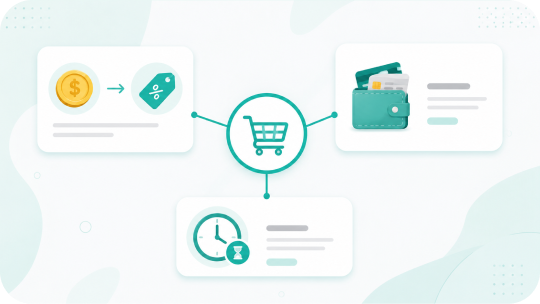
What the Sales Incentive engine gives a programme owner
Configurable task and reward management
Create loyalty tasks with custom templates, point values and conversion rules. Assign at outlet level. Track active modules with task status and rewards. Edit, clone or deactivate any running task.
Point-to-reward configuration and controls
Set the point-to-reward conversion, redemption limits per order, expiry rules and notifications. Upload custom coin images. Redemption runs to digital wallets or to product.
Analytics on participation, redemption and ROI
Points value tracked MTD, QTD and YTD. ROI on the loyalty programme against investment. Completion rate, active outlets and redemption value, by channel, outlet class and region, with alerts on zero-participation outlets.
Only about a quarter of sales reps can calculate their own variable pay
Gartner found that just 24 percent of sales reps are able to easily calculate their total variable compensation, according to Gartner (2019). Every point of that gap is motivation the plan paid for and did not buy.
Sales Incentive closes it by moving the calculation to the point of action. The task card shows the points before the rep decides. The nudge shows the points about to be lost. The order screen shows the points earned. The monthly summary shows potential against earned, with the shortfall itemised by category.
Sales incentive questions, answered
The distinction from conventional variable pay is where the calculation happens. A quarterly incentive plan requires the rep to hold a formula in their head and estimate what today's action is worth against it, which almost nobody does. A task-based incentive moves the calculation to the point of action: the task card shows the points, the nudge shows the points about to be lost, the order screen shows the points earned. The rep never has to compute anything.
The problem compounds with the rest of the rep's day. A large share of a rep's working time goes to non-selling tasks, which leaves little room to interrogate a payout even if they wanted to. So the plan gets ignored, behaviour is driven by habit rather than by the incentive, and the company pays out anyway.
The points-at-risk nudge is the mechanism that changes behaviour rather than reports on it. Telling a rep after the fact that they missed points is information; telling them mid-visit that a specific number of points is about to be lost, and what closes the gap, is a decision they can still act on.
The practical difference is visibility. Under a conventional plan, a rep at the end of a month sees a number they cannot reconstruct. Here they see potential against earned, achievement split by category, and the shortfall itemised, including points lost specifically to unfulfilled orders. A rep who can see exactly where the money went is a rep who can do something about it next month.
That gap is the most useful number on the screen for both sides. For the rep it shows precisely which behaviour cost them money, whether that was cross-sell tasks not attempted or orders that went unfulfilled. For the programme owner it shows whether the plan is failing on design or on execution: consistently high potential and low earned in one category means the tasks are unattractive or unachievable, not that the reps are unmotivated.

Show Us a Better SFA, DMS or eB2B. Win 1 Million $.
Get a Big 4 firm to audit your platform against ours. Score higher on capability. We cut the cheque.



Open to any competing SFA, DMS or eB2B provider. Audit must be a Big 4 firm using a scorecard agreed with SalesCode.ai in advance.
AI Native Products
Image Recognition
Connectors
The AI-native route-to-market platform for CPG & FMCG enterprises — delivering a contractually guaranteed sales uplift, backed by IEEE peer-reviewed ML.
+91 8031152805
Mon–Fri · 10:00–19:00 IST
business@salescode.ai
Talk to our team
Social